Monday, June 18, 2012

The Lives of Others: Homage to voices of defiance


Imagine living in a world where your every move is monitored, your every word is relentlessly recorded and every aspect of your life is cautiously captured. This unsettling reality of a totalitarian state is portrayed brilliantly in the film ‘The Lives of Others’.

This Oscar Award winning German film by director Florian Henckel von Donnersmarck, is set in East Germany in 1984 during the Cold War period. In the movie, the Stasi or the Secret police, spy on every intricate detail of the lives of East Germany’s citizens, to prevent any undercurrents of dissent against the ruling government. 


Director: Florian Henckel von Donnersmarck

Film clip

In the film, Capt. Gerd Wiesler (Ulrich Muehe), a Stasi agent is assigned to spy on Georg Dreyman (Sebastian Koch), a playwright. Dreyman is a staunch Communist and vocal supporter of the government. However, he is put under the scanner by a high ranking government official who has an ulterior motive to win over Christa-Maria Sieland (Martina Gedeck), the writer’s girlfriend.

The cold, grey and dark overtones of the film resonate the dreary reality of the time. This is offset by the warm humanity of the two characters who constitute the film. The movie belongs to Wiesler and Dreyman, who transform from being blind followers of a repressive regime to fearless exponents of their own moral and personal volition.

The movie has subtle but thrilling plot points which elicit a constant ebb and flow of drama and tension. It is rooted in the harsh reality of East Germany and it is this historicity that gives the movie a greater significance. The film pays homage to the infinite individual acts of defiance for the benefit of a nation that go unacknowledged. 


- Parinitha Shinde


Thursday, June 14, 2012

The Lady: Depicting determined struggle


Aug San Suu Kyi, as we know her, is a bold woman with a never-say-die attitude. She is fighting for decades to free Myanmar from the despotic military regime and thus bring about democracy. Only recently have her efforts shown some signs of bearing some fruit. Her party National League for Democracy won 43 of the total 45 seats for the Myanmar lower house. Suu Kyi herself won from Kawhmu constituency.

However, not many of us know about her past, except may be for the fact that she has been under house arrest from 1989 till recently. She was awarded the Nobel Peace Prize in 1991. A recent film The Lady directed by Luc Besson depicts her life and her struggle and gives us an insight into Suu Kyi’s phenomenal personality. She was born to Aung San who was a freedom fighter, but sadly, he was murdered by the conspirators. Eventually, Sui Kyi had to go abroad to pursue her studies. In the meantime, Myanmar, then Burma, was reeling under the cruel rule of the military dictators. Protestors were decimated by the hundreds. All such development led Suu Kyi to plunge into freedom struggle; freedom not so much from an external enemy, but from the nasty rulers within.


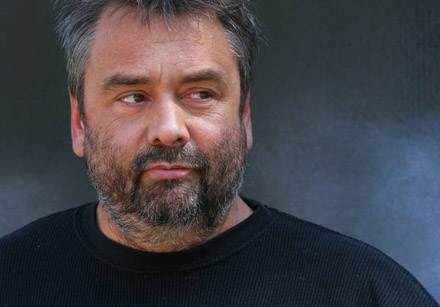
                                                                  Director Luc Bresson

Film Clip

Of course, this meant a lot of sacrifice. She had to leave behind her husband and two sons in the United States. Her sons were deprived of her personal care. But they were very understanding and supported her cause.

The film has portrayed all this quite realistically. The Suu-Kyi look-alike Michelle Yeoh too has done quite a justice to the role, though she basically does action oriented films. (Remember Crouching tiger, Hidden Dragon?)

Apart from anything else, the message the film drives home is that any struggle, more especially a political struggle, needs a charismatic leadership. In most cases, such leadership comes from a man. For a change, here is a woman who dares the enemy within. How long will she have to struggle? If indications are anything to go by, may not be very long. Suu Kyi is truly an inspiration to anyone who dares to fight a noble cause. 

- Melwyn Pinto SJ 

Monday, June 04, 2012

Stoning of Soraya M: subjugation of feminine

In a patriarchal society the subjugation of women is unfortunately considered normal and a given. Matters become worse if a religious sanction is given to it. In other words, religion is brought in to licence the cruelty of the male supremacy.

While such male dominance is prevalent in all religions across the globe, it is more pronounced in Islam, especially in theocratic countries.

‘Stoning of Sorya M’, a 2008 Persian-English film, directed by Cyrus Nowrasteh, is a brutal portrayal of such male dominance at its worst. The film shocks you beyond measures, not just by certain gory visuals, but by the repugnant male ego that tries to destroy a helpless and relatively weak female. 


Director: Cyrus Nowrasteh

Film Clip

The film is based on a real life incident written by French-Iranian journalist Freidoune Sahebjam about the stoning of Soraya apparently for indulging in adultery, all in the name of religion. While the film portrays powerfully the dominant masculine and its cruelty, very many questions remain unanswered.

For example, for the record, even if the woman is caught in adultery, can she be implicated in her absence? Can the male decide what is good or bad for the female? Can it really be true that the male is more equal than the female when both complement each other?

While stoning of Soraya is the depiction of brutal execution of a ‘gulity’ woman, a practice apparently present even to this day in Iran, such brutalities – both physical and mental – take place on a daily basis against women all over the world. The attempt is not just to subjugate women, but to suppress the feminine itself. There is a scene in the film where the elder son of Soraya admonishes the younger one who is saddened by the fact that his mother has to die. He is told: “Grow up to be a man.” In other words, this elder son and many sons like him will grow up to be just that, nurturing false male ego to torment and torture their wives and daughters. They will grow up with a misplaced notion that anything feminine is inferior to the masculine.

The world would definitely have been a better place, if the feminine was recognised and given its due by a world that thinks it thrives on male supremacy.

The two main female characters in the film Soraya and Zahra played respectively by Mozhan Marno and Shohreh Aghdashloo have given a brilliant performance. 

- Melwyn Pinto SJ

Tuesday, May 29, 2012

Kahaani: A story that wasn’t

Everyone knows that terrorism is a complex and dangerous labyrinth of irrational minds. However, can it even be a power-house that involves an unholy nexus between so called well-meaning, socially respected civilised officials, bureaucrats and extremists? Scholars and experts on the subject do not deny the existence of such a possibility. A terrorist will never be able to achieve his ‘lofty’ aims unless he has a clue as to how the government machinery functions from inside.

The theme of the film Kahaani is just that. It brings forth a very complex issue of extremists making the best use of government research through the help of some insiders to carry out their terror acts. While watching the film one cannot but wonder if such could be the case in reality, the film, however, looks a convincing fiction.  The nexus between the underworld and politicians and government officials has long been established. 


Film Director: Sujay Ghosh


Film Clip


Apart from this intriguing issue, what makes the film special is the character Vidya Bagchi played by Vidya Balan. She seems to be in an eternal search for her lost husband. While she finds answers to the mysterious disappearance of her husband, her search for a state of reason in a world ravaged by mindless violence and useless warfare would never end.

Vidya Balan has absolutely personalised the role of a searching spouse. As Inspector Rana (Parambrata Chatterjee) puts it at the end, Vidya Bagchi never existed; she is just an illusion. Indeed Vidya epitomises the illusory character through her seamless expressions.

A good film must stimulate questions rather than giving ready-made answers. Kahaani indeed raises very many compelling questions and leaves the audience into deep thought for long.
- Melwyn Pinto SJ

Tuesday, May 15, 2012

The Chorus - education through music


There have been several films which have teacher as the protagonist. To Sir With Love and Freedom Writers come to mind immediately. But this 2004 French film The Chorus (Les Choristes) is unique, because here the teacher uses music to tame and mould a bunch of impossible boys. Thus music is the second protagonist in this film.


Director Christophe Barratier

Film Clip

Clement Mathieu played by Gerard  Jugnot, though looks like a dumb guy, is an exceptional teacher who can very well read the minds of the boys. In fact, he is a genius, which the boys realise but slowly. While their Principal, a Hitler style terror, thinks punishment is the best way to train boys, Mr Mathieu has other ideas. He uses music to engage boys and to discipline them.

Among other things, the music score composed by Bruno Coulais is just superb – it’s sensitive and it’s heart-warming. Further, young Jean-Baptiste Maunier who plays Pierre Morhange is indeed impressive as the gifted singer.

The film, no doubt, raises many a question about the present day education system worldwide, which is bereft of attention to students’ overall well being and focuses largely on dry academics and discipline. While students need to learn discipline in life, there is more than one way to master and impart it, which not many educationists understand. Helping students engage in activities their heart is in and allowing them to discipline themselves would be a far easier way to educate students than the hard way of screams, yells and brickbats. The Chorus seems to suggest just that.

Director Christophe Barratier has been more than successful in brining the best out of the crew to make a well crafted art work that stands out for several reasons.
- Melwyn Pinto SJ