Monday, July 02, 2012

My Sassy Girl: Microcosm of Korean film revolution

Over the last 10 years, the international cinematic landscape has witnessed a rise in growth and popularity of Korean cinema. These movies emerging from South Korea have become a force to be reckoned with, especially in a cinematic climate dominated by Hollywood. These movies are extremely character-driven, have a high technical quality, echo unique cultural sensibilities and display a distinctive narrative style. 

One such movie, which can be considered as a microcosm for the larger trend in the Korean cinema, is director Kwak Jae-yong’s My Sassy Girl. Released in 2001, this movie was at the helm of Korea’s recent commercial and critical success in the film world. If one had to fit this film into a genre, the over-arching label of ‘romantic-comedy’ would suffice. However, such an identification would rob the movie of its subtle complexities. 


Director: Kwak Jae-yong

Film Clip

The movie focuses the lives of two individuals - Gyeon-woo, a student; and a girl, who remains nameless through the film. Their unique and strange love story begins with a series of unfortunate but humorous events. What ensues is a bizarre set of twists and turns which may confound the viewer until the movie draws to an end. The performances by the lead actors Cha Tae-hyun (Gyun-woo) and  Jun Ji-hyun (The Girl) are particularly admirable. The characters are extremely likable and well-rounded, effortlessly expressing a wide range of emotion that appears real and relatable. The plot for the movie is borrowed from real life events, chronicled in an internet novel by Kim Ho-sik.

Since its release, My Sassy Girl has gradually become synonymous with Korean pop culture and has achieved cult status among audiences. Some of the themes of the film – love, pain, loss and resolution - are ubiquitous in all cinema, but it is how these subjects are presented that is novel and unusual.

Ongoing comparisons between Korean cinema and Hollywood in terms of production, content and distribution are prevalent. Hollywood is universally heralded to be the Mecca of all film-making. There is an automatic propensity to parallel any film industry with the prevailing Hollywood standards. However, the themes, styles and methods of movie making that make Korean cinema so inimitable, seem unlikely to be compromised. This might be a welcome sign, making Korean cinema a formidable contender against Hollywood hegemony, at least in South East Asia.

- Parinitha Shinde

Wednesday, June 27, 2012

Beru: Exposing roots of administrative dysfunction


There have been many films dealing with corruption and red tapism at government and administrative level. While some of them are quite open in their attack, others use metaphoric style to convey the same message.

Beru, a Kannada film by P. Sheshadri, falls in the second category. 


Director: P. Sheshadri


This indeed is one of the best films by P. Sheshadri, the Kannada parallel cinema director. The story is about an old folk artist Goravayya (Venkata Rao) who fights to get permission to cut a tree, the roots of which have crept into his hut. However, he is caught in the web of corrupt and non-functional bureaucracy which makes his life difficult at each stage.

The film raises several issues like corruption and careless attitude of administrative system in the country. It also deals with a situation showing how difficult it is even for an honest officer Raghunandan (Sucheendra Prasad) to be clean and upright, given the system which is prone to dysfunction and corruption.

The title is indeed metaphoric as it is also a symbol for the deep-rooted disorder and recklessness of most of the administrative system. Camera work and the screenplay is spot on. It truly deserves the National Award that it has won. 
- Melwyn Pinto SJ

Beru: Exposing roots of administrative dysfunction


There have been many films dealing with corruption and red tapism at government and administrative level. While some of them are quite open in their attack, others use metaphoric style to convey the same message.

Beru, a Kannada film by P. Sheshadri, falls in the second category. 


Director: P. Sheshadri


This indeed is one of the best films by P. Sheshadri, the Kannada parallel cinema director. The story is about an old folk artist Goravayya (Venkata Rao) who fights to get permission to cut a tree, the roots of which have crept into his hut. However, he is caught in the web of corrupt and non-functional bureaucracy which makes his life difficult at each stage.

The film raises several issues like corruption and careless attitude of administrative system in the country. It also deals with a situation showing how difficult it is even for an honest officer Raghunandan (Sucheendra Prasad) to be clean and upright, given the system which is prone to dysfunction and corruption.

The title is indeed metaphoric as it is also a symbol for the deep-rooted disorder and recklessness of most of the administrative system. Camera work and the screenplay is spot on. It truly deserves the National Award that it has won. 
- Melwyn Pinto SJ

Monday, June 18, 2012

The Lives of Others: Homage to voices of defiance


Imagine living in a world where your every move is monitored, your every word is relentlessly recorded and every aspect of your life is cautiously captured. This unsettling reality of a totalitarian state is portrayed brilliantly in the film ‘The Lives of Others’.

This Oscar Award winning German film by director Florian Henckel von Donnersmarck, is set in East Germany in 1984 during the Cold War period. In the movie, the Stasi or the Secret police, spy on every intricate detail of the lives of East Germany’s citizens, to prevent any undercurrents of dissent against the ruling government. 


Director: Florian Henckel von Donnersmarck

Film clip

In the film, Capt. Gerd Wiesler (Ulrich Muehe), a Stasi agent is assigned to spy on Georg Dreyman (Sebastian Koch), a playwright. Dreyman is a staunch Communist and vocal supporter of the government. However, he is put under the scanner by a high ranking government official who has an ulterior motive to win over Christa-Maria Sieland (Martina Gedeck), the writer’s girlfriend.

The cold, grey and dark overtones of the film resonate the dreary reality of the time. This is offset by the warm humanity of the two characters who constitute the film. The movie belongs to Wiesler and Dreyman, who transform from being blind followers of a repressive regime to fearless exponents of their own moral and personal volition.

The movie has subtle but thrilling plot points which elicit a constant ebb and flow of drama and tension. It is rooted in the harsh reality of East Germany and it is this historicity that gives the movie a greater significance. The film pays homage to the infinite individual acts of defiance for the benefit of a nation that go unacknowledged. 


- Parinitha Shinde


Thursday, June 14, 2012

The Lady: Depicting determined struggle


Aug San Suu Kyi, as we know her, is a bold woman with a never-say-die attitude. She is fighting for decades to free Myanmar from the despotic military regime and thus bring about democracy. Only recently have her efforts shown some signs of bearing some fruit. Her party National League for Democracy won 43 of the total 45 seats for the Myanmar lower house. Suu Kyi herself won from Kawhmu constituency.

However, not many of us know about her past, except may be for the fact that she has been under house arrest from 1989 till recently. She was awarded the Nobel Peace Prize in 1991. A recent film The Lady directed by Luc Besson depicts her life and her struggle and gives us an insight into Suu Kyi’s phenomenal personality. She was born to Aung San who was a freedom fighter, but sadly, he was murdered by the conspirators. Eventually, Sui Kyi had to go abroad to pursue her studies. In the meantime, Myanmar, then Burma, was reeling under the cruel rule of the military dictators. Protestors were decimated by the hundreds. All such development led Suu Kyi to plunge into freedom struggle; freedom not so much from an external enemy, but from the nasty rulers within.


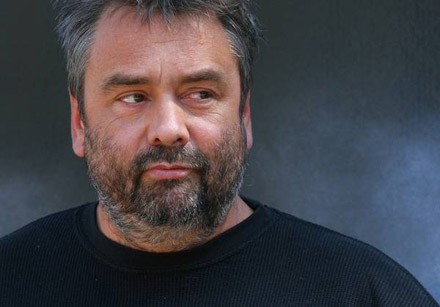
                                                                  Director Luc Bresson

Film Clip

Of course, this meant a lot of sacrifice. She had to leave behind her husband and two sons in the United States. Her sons were deprived of her personal care. But they were very understanding and supported her cause.

The film has portrayed all this quite realistically. The Suu-Kyi look-alike Michelle Yeoh too has done quite a justice to the role, though she basically does action oriented films. (Remember Crouching tiger, Hidden Dragon?)

Apart from anything else, the message the film drives home is that any struggle, more especially a political struggle, needs a charismatic leadership. In most cases, such leadership comes from a man. For a change, here is a woman who dares the enemy within. How long will she have to struggle? If indications are anything to go by, may not be very long. Suu Kyi is truly an inspiration to anyone who dares to fight a noble cause. 

- Melwyn Pinto SJ 

Monday, June 04, 2012

Stoning of Soraya M: subjugation of feminine

In a patriarchal society the subjugation of women is unfortunately considered normal and a given. Matters become worse if a religious sanction is given to it. In other words, religion is brought in to licence the cruelty of the male supremacy.

While such male dominance is prevalent in all religions across the globe, it is more pronounced in Islam, especially in theocratic countries.

‘Stoning of Sorya M’, a 2008 Persian-English film, directed by Cyrus Nowrasteh, is a brutal portrayal of such male dominance at its worst. The film shocks you beyond measures, not just by certain gory visuals, but by the repugnant male ego that tries to destroy a helpless and relatively weak female. 


Director: Cyrus Nowrasteh

Film Clip

The film is based on a real life incident written by French-Iranian journalist Freidoune Sahebjam about the stoning of Soraya apparently for indulging in adultery, all in the name of religion. While the film portrays powerfully the dominant masculine and its cruelty, very many questions remain unanswered.

For example, for the record, even if the woman is caught in adultery, can she be implicated in her absence? Can the male decide what is good or bad for the female? Can it really be true that the male is more equal than the female when both complement each other?

While stoning of Soraya is the depiction of brutal execution of a ‘gulity’ woman, a practice apparently present even to this day in Iran, such brutalities – both physical and mental – take place on a daily basis against women all over the world. The attempt is not just to subjugate women, but to suppress the feminine itself. There is a scene in the film where the elder son of Soraya admonishes the younger one who is saddened by the fact that his mother has to die. He is told: “Grow up to be a man.” In other words, this elder son and many sons like him will grow up to be just that, nurturing false male ego to torment and torture their wives and daughters. They will grow up with a misplaced notion that anything feminine is inferior to the masculine.

The world would definitely have been a better place, if the feminine was recognised and given its due by a world that thinks it thrives on male supremacy.

The two main female characters in the film Soraya and Zahra played respectively by Mozhan Marno and Shohreh Aghdashloo have given a brilliant performance. 

- Melwyn Pinto SJ