Saturday, September 28, 2013

The Lunchbox: Striking a chord through dabba!

There has been a lot of heartbreak among film critics that a simple, yet heartwarming film like The Lunchbox has not been selected by India for the Oscars competition this year. Understandably, there is quite a bit of sense in such heartbreak, if one compares this film to the one that is selected The Good Road. Definitely, The Lunchbox would have given a tough competition, which one doubts The Good Road will. 


Director: Ritesh Batra

Film Clip

So what is so special about The Lunchbox? Nothing really! Except that it seems a story that can be felt unfolding on a daily basis in the lives of many in busy crowded cities like Mumbai. Loneliness is a strong theme in the film. But, the way the protagonists try to deal with loneliness by communicating with each other in the most unconventional way possible, seems a very amusing aspect of the film.
Mr Fernandes (Irfan Khan) and Ila (Nimrat Kaur) have both problems unique to them, yet what is common to both is a heavy heart. Perhaps it is this that helps them vibrate with each other, even without actually meeting personally.
The film has some very interesting and imaginative traits such as the unseen but understanding aunty, whose voice we (and Ila) hear all the time. Then there is Ila herself who finds out unconventionally, but quite certainly, that her husband is being unfaithful to her. The way the director presents each character sans any complexities is a credit to his insight into humans. While the two protagonists would like to meet, the director seems certain that a predictable end would only spoil the beauty of the film. What makes the film work, besides its storyline, is the amazing performances of Irfan, Namita and, of course, the talkative Nawazuddin.
Sad that it didn’t make it to Oscars!
- Melwyn Pinto SJ

Friday, September 20, 2013

The Accused: Victim is the accused!

The recent verdict of death sentence by the Fast Track court in Delhi slapped on the rapists brings back memories of this 1988 film The Accused. The situation seems somewhat similar, except that the real incident that inspired this film had a victim who survived the gang rape and fought till the end in the court and ensure that the rapists got their punishment, unlike the Delhi gang rape victim who succumbed to her gruesome injuries.


Director: Jonathan Kaplan

Film Clip

The film brings forth many issues related to legal system that handles rape cases. It is not easy at all for a rape victim to narrate her horror stories in the court, especially when the other party (the accused) is out to insensitively destroy her. That is exactly what happens to Sarah Tobias when the lawyer of the accused asks her whether ‘she is sure who were witnessing her being raped at a time when there was such a big noise in the bar’. As though that was highly important when the issue at hand was violence against a hapless victim!
The legal system all over the world has a history of being very insensitive to the victims. And India is no exception. And when the perpetrators of crime are powerful and influential, they can even buy the judges and what you have is just a travesty of justice. But for public outcry, even the Delhi rape case too would have turned out to be just another ‘incident’. While there are discussions whether death sentence to rapists would bring down the rate of crime in the country, the protagonist of the film Sarah Tobias sets the standards for the victims and for all those who care not to give up fighting till the end for justice. Jodie Foster as the rape victim does justice to her character. The title The Accused is indeed a misnomer as it actually refers to the victim who is made to look like an accused.
- Melwyn Pinto SJ

Wednesday, August 21, 2013

The Bang Bang Club: Duty vs humanity

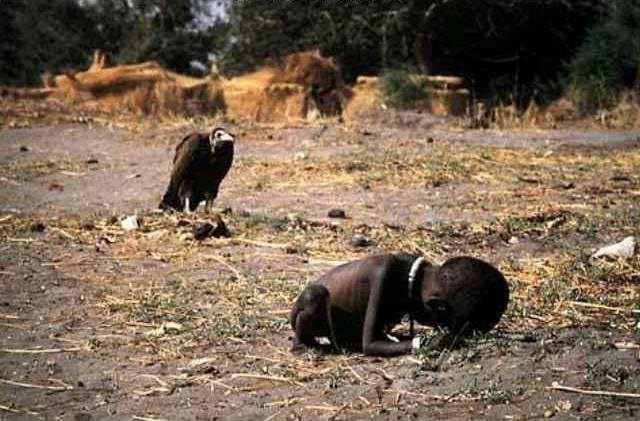
What comes first to a journalist, photographer or such other media person? Is it his/her duty as a professional or humanity? This is not an easy question to answer. The famous case is that of Kevin Carter and his Pulitzer Prize winning picture of a Sudanese girl and the vulture that was waiting to devour her. The picture, even as it won the coveted award, raised many questions as to the ethics of journalism in general and photo journalism in particular. Apparently, Kevin Carter made sure not to disturb the vulture, lest it should fly and he lose a ‘precious moment’. 


 Kevin Carter's Pulitzer Prize winning picture

Kevin Carter

Director: Steven Silver

Film Clip

Kevin Carter’s story is part of the film The Bang Bang Club (2010). The film as such is about a group of press photographers who covered the South African ethnic violence in the early 1990s. They were exceptional photographers who made news all over the world with their rare pictures taken in highly dangerous terrains of human violence. The film quite simply portrays the risk that a committed photo journalist takes just to get that ‘precious picture’. At the same time, of course, it raises questions in the minds of the audience as to why one has to push himself so hard – is it for the glory that his work would eventually bring or genuine concern for humanity? The girlfriend of one of the photographers puts it depressingly straight across to him: “May be you have to be like that to do what you do. I think you have to forget that they are real people!” Do journalists, press photographers, broadcast journalists lose their humanity in the din of getting those crucial bites and moments? The film might just throw some light on the subject. The film, though, is quite engaging and full of action throughout. 
- Melwyn Pinto SJ

Monday, August 05, 2013

Guzaarish: Seeking right to die!

If someone has a right to life under Article 21 of the Indian Constitution, does that person also have a right to die? That is the issue around which the film Guzaarish (2010) revolves. The film seems to be dealing with the subject of euthanasia. However, it is much more than that. It raises several issues such as a person’s dignity to life, which also involves dignity to die; not to mention the issue of putting an end to the prolonged suffering. 


Director: Sanjay Leela Bansali

Film Clip
The protagonist of the film Ethan Mascarenhas in his earlier days used to be a magician. However, a near fatal accident de-capacitated him completely. He became paralysed, save for his head. A dedicated nurse Sofia (Aishwarya Rai), just now makes sure that Ethan lives with dignity. However, she is not able to reduce his mental agony of being a vegetable from a state of country’s topmost magician. And this leads him to make that tough decision to appeal for euthanasia. Heated discussions within and outside court take place as regards the validity of the appeal and the uniqueness of the case. All of that indeed makes for some very exciting debating, besides stimulating the mind with nuanced insights. However, the court cannot really break from the law of the land. Can it?
The film has some very high octave performances by Hrithik Roshan, Aishwarya Rai, besides others. While the film itself is quite moving, making us see the point of the protagonist, it sure leads us to some serious reflection. Of course only if we go beyond the film’s exquisite embellishments of sets and costumes. Full marks to Sanjay Leela Bansali!
- Melwyn Pinto SJ

Wednesday, July 17, 2013

Pentagon Papers: Source that cares

'Pentagon Papers' expose in the early 70s by the New York Times was one of the sensational exposes in the world of journalism. Of course, Watergate, which came later, was even more sensational for more than one reason. However, the Pentagon Papers became sensational because the source was one of the insiders and a stakeholder so to say. Daniel Ellsberg, the whistle-blower, was a researcher with the defence department and had access to piles of papers (reports) dealing with crucial classified information that dealt with the Vietnam War and the American hand in it. Through the expose the world came to know that the US wanted the war to somehow continue and prolong for its own ulterior motifs. Several Presidents selfishly made thousands of US soldiers victims and martyrs of the brutal war. In the end, what remained was a humiliating defeat at the hand of a tiny nation. All this mayhem for no worthwhile cause!


Daniel Ellsberg, the whistleblower

Director: Rod Holcomb

Film Clip
In a landmark decision, Ellsberg was acquitted by the court which declared that the case was a ‘mistrial’. It was a vindication of the fact that Ellsberg had done what he did in all good faith, keeping the future of a democratic country in mind.
The film Pentagon Papers (2003) has documented these facts quite faithfully. Through the film one comes to what extent a powerful nation can manipulate everything and keep the entire nation in the dark. It happened during Vietnam War, it happened during Iraq war and several other wars. For the US, might seems indeed right! James Spader who plays Ellsberg, has done justice to the role of a whistleblower  A must watch film for students of journalism as well as those interested in knowing more about American hypocrisy and manipulation at the same time. 
- Melwyn Pinto SJ

Saturday, July 06, 2013

The Boy in the Striped Pyjamas: Cruelty and irony of war!

The boy in the striped pyjamas (2008) is a compelling and painful tale of the horrors of world war II. The unique feature of this film is that it tells the brutality of the war without actually showing it in as many images. The whole film is narrated through the eyes of an 8-year old Bruno (Asa Butterfield), son of a German Nazi soldier. Even before Bruno understands what the war is all about and why Jews are not ‘People’ as his father tries to tell him, he is consumed, ironically, by its cruelty.


Director: Mark Hermon

Film Clip

The film is based on a famous novel of the same name written by the Irish novelist John Boyne. The film is directed by Mark Herman.

The film raises many questions about war. In fact, the most important aspect that the film tries to send across is that war originates and is fought first in the mind. What we see outside is just the expression of the brutalities caused by the mind for no gain. Even as six million Jews were killed in the war (the film has a reminiscence of it), the Nazis tried to convince people that the Jews had to be killed as they were subhuman and a threat to the greater nationhood of Germany. Bruno, the protagonist, however, finds it extremely difficult to fathom this ‘reality’ and hence becomes an ironic victim of sorts of the same war.

The film has been narrated with a touch masterly craftsmanship with brilliant performances by the actors, especially Asa Butterfield as Bruno and Jack Scanlon who acts as the little Jew, Shmuel. The friendship that these two build up in their brief period of meeting, makes one sit back and reflect whether breaking barriers after all is such a big difficulty at all! 
- Melwyn Pinto SJ